The Mindrolling Lineage

Teachings

The Mindrolling Lineage

The Millennium Confluence of Kama and Terma (1676)

- 1 -

The Confluence of Two Rivers: The Millennium Connection of Kama and Terma

In Tibetan Buddhism, the transmission of Dharma flows like great rivers, branching into two main streams:

  • Kama (Oral Transmission): Like the mighty Yarlung Tsangpo River, it flows unbroken from primordial Buddha Samantabhadra through generations of masters, preserved through oral transmission.
  • Terma (Revealed Treasures): Like glacial waters emerging and retreating, it consists of sacred teachings hidden by Guru Padmasambhava in rocks, lakes, and mountains, awaiting destined tertöns (treasure revealers) to rediscover them.

In 1676, a master named Terdak Lingpa devoted his life to merging these two great streams, creating a “confluence of Dharma” in Southern Tibet, igniting a revolution in the transmission of Vajrayana Buddhism.

- 2 -

Terdak Lingpa: The Reincarnation of Guru Padmasambhava’s Mission

In the Fire Dog Year of 1646, on the 10th day of the second month in the Tibetan calendar, an extraordinary child was born into an aristocratic family south of Lhasa. His birth was accompanied by miraculous signs:

  • Tremors and Rainbows: The ground trembled slightly, and seven rainbows stretched across the sky.
  • Sacred Text in the Womb: The midwife discovered a piece of ancient Tibetan script wrapped in the newborn’s placenta, inscribed with the words “Union of Kama and Terma.”

His father named him Terdak Lingpa, meaning “Treasure Holder of the Dharma Realm.”

A Child Prodigy Destined for Greatness

  • Teaching at Eight: When his father was absent, he performed empowerment rituals for villagers. Holding vajra and bell like toys, yet manifesting deities through his blessings.
  • Debating at Fifteen: At Drepung Monastery, he debated the Madhyamaka philosophy against esteemed Gelug scholars. His argument of “the inseparability of Sutra and Tantra” impressed the Fifth Dalai Lama, who declared:
    “This child is none other than the true emanation of Guru Rinpoche.”

- 3 -

Four Great Terma Discoveries: Unlocking the Secret Caskets of Guru Rinpoche

Terdak Lingpa revealed four major terma treasures in his lifetime, each rediscovered in miraculous circumstances:

At Age 18 – Yamalung Sacred Site

    • The Longevity Tantra: Retrieved from a glacier crevice, containing the “Nine Deities of Long Life” ritual, granting practitioners extraordinary lifespan.
    • A Sign from Nature: A Sanskrit “A” appeared on the ice and remained visible for three days.


At Age 31 – Ogatsha Sacred Lake

    • Vajrasattva Purification Ritual: Found in a crystalline reliquary floating on the lake, containing a swift method to accumulate 100 billion Vajrasattva mantras.
    • A Divine Reflection: Witnesses saw Terdak Lingpa’s reflection in the water transform into Guru Rinpoche for a full incense-stick’s duration.


At Age 22 – Yarlung Shetsal Mountain

    • Wrathful Guru Practice: Discovered in a snake-infested cave, including a golden phurba and “The Wrathful Black Hayagriva Exorcism” ritual, later famed as “the foremost demon-subjugation practice.”
    • A Guardian’s Appearance: As he unearthed the terma, the fierce protector Rahula manifested outside the cave, blowing a human-bone trumpet.


At Age 35 – Shematak Cliffside

    • The Thirteen Aspects of Avalokiteshvara: Retrieved from a perilous rock face, containing a copper casket of Avalokiteshvara’s disaster-averting sadhana and a golden-painted mandala diagram.
    • An Omen of Protection: A sudden avalanche was miraculously diverted by a giant eagle spreading its wings above him.

- 4 -

A Meeting of Dharma Kings: The Dance with the Fifth Dalai Lama

The legendary encounter between Terdak Lingpa and the Fifth Dalai Lama marked a historic convergence in Tibetan Buddhism:

  • Mutual Teachers and Students: The Dalai Lama imparted the essence of the Kangyur (Buddhist Canon), while Terdak Lingpa transmitted terma teachings in return. They called each other “Root Guru.”
  • The Union of Lineages: The Fifth Dalai Lama incorporated Mindrolling Terma into the Gelug tradition’s practice, and even today, the Potala Palace preserves a phurba (ritual dagger) crafted by Terdak Lingpa.

One historical account describes an empowerment ceremony where the two sat side by side:
Terdak Lingpa holding a vajra bell, the Dalai Lama shaking a Dharma drum—when their instruments resonated in harmony, the deity Kalachakra manifested in the sky, bowing in acknowledgment.

- 5 -

The Establishment of Mindrolling Monastery: A Land of Maturity and Liberation

In 1695, Terdak Lingpa founded Mindrolling Monastery in Southern Tibet, establishing three unshakable principles:

  1. Equal Emphasis on Sutra and Tantra: Mornings dedicated to the study of “The Stages of the Path,” nights devoted to Dzogchen meditation.
  2. Art as a Means of Awakening: Sand mandalas measured to the precision of a hair’s width, ritual dances synchronized to celestial alignments, and chanting with near-perfect musical tonality.
  3. Discipline as the Foundation: Monks recited the Pratimoksha vows three times daily, and those who violated them underwent three-year retreats.

Unique Traditions

  • Torma Offerings: Ritual sculptures made of roasted barley flour were shaped into wrathful deities and incinerated in fire pujas, often revealing relics in the ashes.
  • Secret Mudras: A system of 108 symbolic hand gestures encoded within the Kalachakra system, performed with lightning-fast precision.

- 6 -

The “Dungsay” and “Khenchen” System: A Twin Helix of Bloodline and Dharma

Mindrolling introduced an unprecedented dual-lineage system, blending familial succession with monastic leadership:

  • The Eldest Son Becomes the Dungsay: Oversees the monastery’s administration and diplomatic affairs, mastering the five sciences.
  • The Second Son Becomes the Khenchen: Ordained as a monk, upholding the spiritual lineage, requiring formal recognition by the Dalai Lama.

Historical Examples

  • Darma Shri, Terdak Lingpa’s Younger Brother: A great translator who rendered Sanskrit tantras into Tibetan with unmatched precision.
  • His Eldest Son, Dungsay Gönsang Wangpo: Expanded the monastery and negotiated with Qing Dynasty envoys, securing Mindrolling’s exemption from warfare.

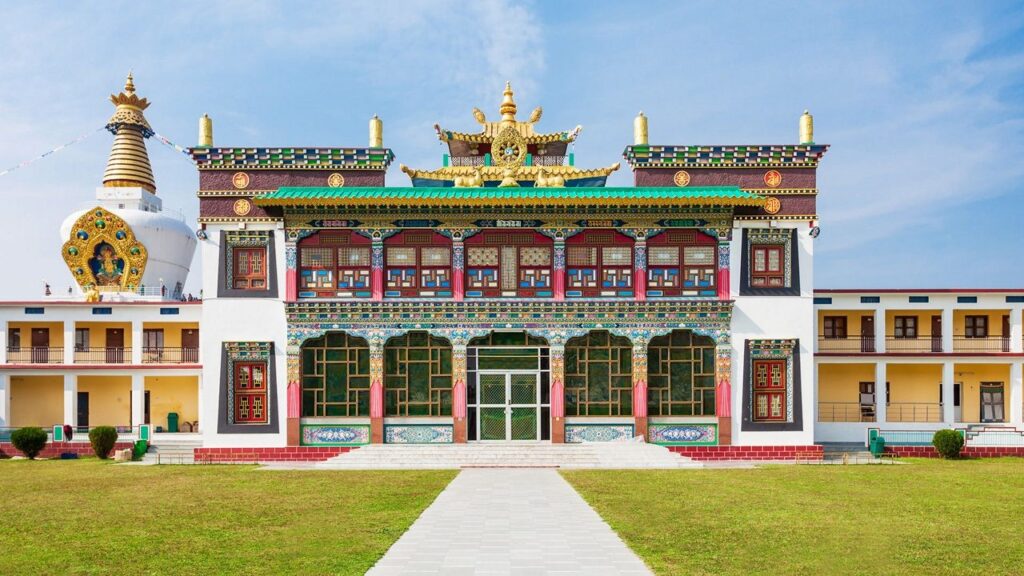
Kathok Monastery Today

A Timeless Legacy in Sand and Dance

Even today, Mindrolling Monastery remains a pinnacle of Vajrayana artistry and esoteric practice:

  • The Mystery of Sand Mandalas: Monks create intricate mandalas with colored sand, achieving an error margin of less than 0.1 millimeters, hailed by UNESCO as “the zenith of human craftsmanship.”
  • The Vajra Dance Tradition: Every fifth month of the Tibetan calendar, during the “Great Vajra Subjugation Festival”, monks don nine-faced Phurba masks, their synchronized steps shaking the earth.


An elderly Khenchen in the monastery often points to an ancient thangka, telling visitors:
“Look, this is the ‘Twin Kings Giving Teachings’ painting—one in red robes representing Terma, the other in yellow symbolizing Kama. The two rivers merge here, never to part again.”

🪷🪷🪷