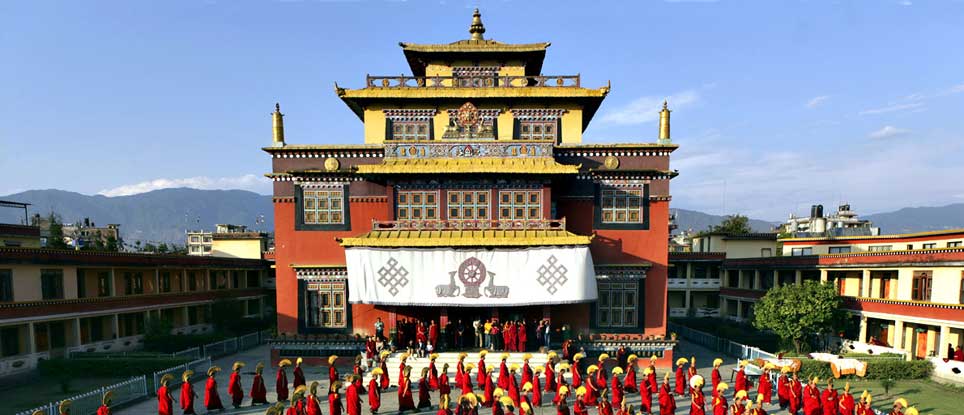
The Shechen Monastery

Teachings

The Shechen Monastery

The Lion Guardian of Kham

- 1 -

The Beginning

In 1695, the Nyingma tradition in Kham was devastated by Mongol forces. The Fifth Dalai Lama sent his disciple, Rangjung, to restore the Dharma.

- 2 -

A Divine Sign

As Rangjung traveled through a barren land, he encountered a mysterious old man—an emanation of Guru Padmasambhava—who pointed to a massive white rock in the distance and said:
“This place resembles a leaping lion. Build a monastery here, and the Dharma will flourish once more!”

The rock, shaped like a lion, shimmered under the sunlight, marking the destined site for Shechen Monastery.

- 3 -

Challenges in Construction

  • Sorcerers’ Interference: Local shamans summoned lightning to strike the construction site. Rangjung used his spiritual power to transform the lightning into rain, nourishing the land instead.
  • Mongol Raids: One night, Mongol soldiers launched a surprise attack, but the white rock suddenly transformed into a glowing lion, frightening the invaders away.

- 4 -

The Rise of Shechen Monastery

After three years, Shechen Monastery was completed:

  • The main temple was built inside the “Lion’s Mouth” cave, embodying the power of Dharma.
  • Sacred statues were forged from melted-down weapons, symbolizing the transformation of hatred into wisdom.
  • Monks studied scriptures by day and practiced in retreat during winter, also mastering Tibetan medicine to heal the sick. The monastery soon became known as the “Temple of Light” among the people.

- 5 -

Expansion and Legacy

Shechen Monastery quickly became a major Buddhist center, expanding to over 160 branch monasteries and producing great masters, including:

  • Jamyang Khyentse Wangpo: Studied here as a youth before becoming a leader of the Rime (non-sectarian) movement.
  • Patrul Rinpoche: Spent thirteen years in retreat writing his masterpiece. When he emerged, a withered tree miraculously bloomed, astonishing the region.

Shechen’s Influence Today

Even today, travelers in Kham can still see the legendary White Lion Rock. Every summer, monks gather for debate sessions, their voices as thunderous as a lion’s roar.

Locals say:
“This lion rock is Rangjung’s guardian of Kham—so long as it stands, the Dharma will never fade, and the lion shall never sleep.”

🪷🪷🪷